Saturday, June 8, 2013

Korean Music Time! #10: Byeon Jin-Seob - Wishful Thinking (변진섭 - 희망사항)

Thanks to the excellent YouTube channel "pops8090," which is nothing but classic Korean pop (most of it from the '80s and '90s, as per the name), I discovered this unique little song from 1989. Honestly, it stands out a lot from the mostly serious music that dominated that era. It's much more upbeat and jaunty, and there were so many words I didn't understand that I could tell it wasn't full of cliche lyrics. The more I translated, the more I appreciated this quirky little number.

At first blush, the lyrics might seem "sexist" against women, something liberals would fight each other tooth and nail for the honor of denouncing most vehemently. However, not only was this song completely tongue-in-cheek, but it was actually written by a woman, and the composer gets the final word at the end. How's that for a twist?

Before I go into further detail, why don't you have a listen, and be amused by the lyrics? The standard disclaimer about the accuracy of anything I translate applies.


희망사항
Wishful Thinking

청바지가 잘 어울리는 여자
A woman whose jeans fit well
밥을 많이 먹어도 배 안나오는 여자
A woman whose stomach doesn’t stick out even if she eats a lot of food
내 얘기가 재미없어도 웃어주는 여자
A woman who laughs even when my talk is boring
난 그런 여자가 좋더라
I like a woman like that!

머리에 무스를 바르지 않아도
Even if she doesn’t put mousse in it,
윤기가 흐르는 여자
A woman with flowing, lustrous hair
내 고요한 눈빛을 보면서
As she sees my silent gaze,
시력을 맞추는 여자
A woman whose eyes meet mine

김치 볶음밥을 잘 만드는 여자
A woman who makes kimchi fried rice well
웃을 때 목젖이 보이는 여자
A woman whose uvula is visible when she laughs
내가 돈이 없을 때에도
Even when I don’t have money,
마음 편하게 만날 수 있는 여자
A woman who can meet me without worry

멋내지 않아도 멋이 나는 여자
A woman who looks great even if she doesn’t dress up
껌을 씹어도 소리가 안나는 여자
A woman who doesn’t make noise even if she chews gum
뚱뚱해도 다리가 예뻐서
Because her legs are pretty even if she’s fat,
짧은 치마가 어울리는 여자
A woman who looks good in a short skirt

(Instrumental)

내가 울적하고 속이 상할 때
When I’m gloomy and hurt inside,
그저 바라만 봐도 위로가 되는 여자
A woman who is comforting even by only looking at me
나를 만난 이후로 미팅을
After meeting me
한번도 한번도 안 한 여자
A woman who never once, never once goes on a group blind date

랄라 랄라 랄라 랄라 라 라 라…
La-la, la-la, la-la, la-la, la la la…

난 그런 여자가 좋더라
I like a woman like that!
난 그런 여자가 좋더라
I like a woman like that!

(Woman)
여보세요 날 좀 잠깐 보세요
Look here, kindly look at me a moment
희망사항이 정말 거창하군요
Your wishful thinking is very exaggerated indeed!
그런 여자한테 너무 잘 어울리는, 난 그런 남자가 좋더라
I like a man who is well-suited for such a woman!


The woman singing the final lines is No Yeong-Shim (노영심) the song's composer as well as (I believe) the piano player on the track. On Italki, there was a small debate about the final line's exact meaning. One guy who answered the question believes that the intention is sarcastic, and given the context, I think he's correct, so I understand it as follows:

She's saying "boy, you sure do have a lot of items on your wish list! I like men who are worthy of such women!" I think the implication is that by telling it to the man who just rattled off this series of unrealistic desires, she's implying that such a man is not present at the moment, and is therefore putting him in his place.

I was curious about the story behind this song, and I was able to find some articles in Korean that I translated to get a slightly better idea of just what brought it into being.

This following is an excerpt from an article from just this April, where Byeon Jin-Seob talked about the song on a TV appearance.

On the most recent filming, Byeon Jin-Seob revealed “A tune written by No Yeong-Shim, who was a student then, ‘Wishful Thinking’ was a song included as my second album’s final track, number 11,” and “a song I put in as a bonus that I thought would be fun if I didn’t sing on TV and played in concert,” startling everyone around him.
Famous for the lyric ‘A woman whose jeans fit well,’ Byeon Jin-Seob’s second album bonus track ‘Wishful Thinking’ was an unusual hit song that continuously occupied the top spot a total of 16 weeks, after battling for #1 with his own title song at the time, ‘To You Once Again.’
“The truth is, the plan with ‘To You Once Again’ was to be active as a ‘faceless singer’ who was famous only for songs, but because of ‘Wishful Thinking,’ I became so active in making TV appearances that my face became known,” Byeon Jin-Seob revealed, which also generated laughter in the studio.

Also, I found an interview with No Yeong-Shim, and she talked about the song at one point. The following isn't the full question and answer, only the portions that pertain to this song.

I expect many people would remember you from the days when you sang “Wishful Thinking” while striking the piano on Byeon Jin-Seob’s stage at the end of the ‘80s, so how did a college student majoring in piano come to compose a song and start making TV appearances?

No Yeong-Shim:
I began undergrad in ’86, and during my first year, through a teaching assistant’s recommendation, I ended up doing pop song accompaniments on the <“Young Pops”> radio program that was hosted by Hwang In-Yong. Back then I got to know Lee Moon-Se by chance in a recording studio when we were both doing recordings, and as there was a singer beside me I wondered “couldn’t I possibly make a song too?”, so what I made was “Wishful Thinking” (laughs). I did that and it was fun, so I went on the entertainment programs too, and the whole thing was like a recreational outing.
If the name Lee Moon-Se sounds familiar to you, it might be because I translated one of his songs a while back.

So as you can see, this song was clearly meant to be fun, and it achieved its purpose. Even a non-Korean like me is appreciating it 24 years later. The catchy melody, the humorous lyrics, the infectious whistling, the "Rhapsody in Blue" break at the end, it all adds up to a gem.

Wednesday, June 5, 2013

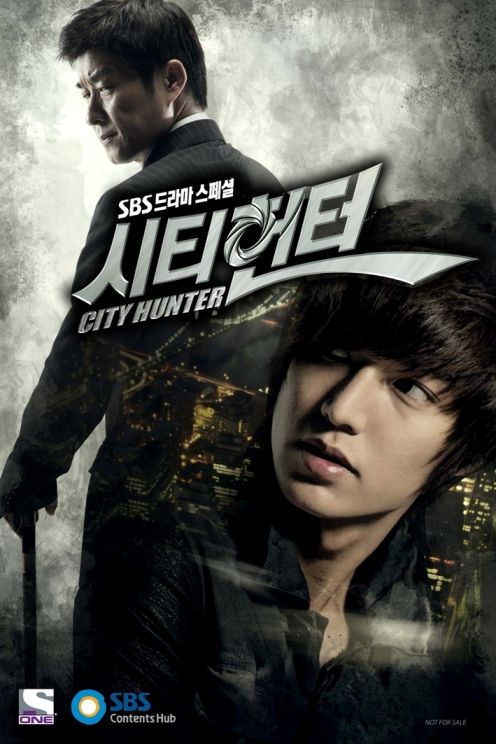
Thoughts on City Hunter, or…Robin Hood Turns His Duties Over to the Government


Well, I’ve finished another drama, and it was quite the pulse-pounder! I’d heard nothing but good things about it before watching, so that’s why I decided to check it out. Did it live up to expectations? Most certainly! Did it do enough to claim the top spot on my list of favorite dramas? Well…just read on.

Plot

If it wasn’t obvious, this may contain spoilers, particularly about the first episode, so if you plan to watch, you might want to avoid this section.

The action begins on October 9, 1983. Two significant events happen on this day: our hero is born, and there’s an assassination attempt on the South Korean president in Burma. Apparently this was a real incident, which I hadn’t heard of before. Park Moo-Yeol (father of the boy born that day) and Lee Jin-Pyo, secret service agents and best friends, are witnesses to this attempt, which was perpetrated by North Korea.

Five South Korean government officials are outraged, and together they conspire on a secret mission, Operation Clean Sweep, to kill off several of North Korea’s military leaders in retaliation. Operation Clean Sweep is so secret that even the president himself doesn’t know about it. Jin-Pyo and Moo-Yeol are tapped to assemble an elite team of 21 men to carry out the mission, and after doing so, they’re dropped off on the North Korean shores to head for Pyeongyang. This whole mission, of course, is totally awesome.

However, back in Seoul, a monkey wrench has been thrown into the plans. The South Korean president has announced that he doesn’t want to retaliate against North Korea, and the U.S. has announced that if South Korea tries to retaliate, they’ll withdraw their military protection from the country. Choi Eung-Chan, the official who devised the operation and personally guaranteed the 21 men that they’d return safely, doesn’t want to abort the mission, since he’d given them his word, but the other four all agree that it’s for the greater good to have the U.S.’s protection. Choi is left with little choice but to find some way to cover up Operation Clean Sweep.

The 21 men are able to kill off several of their targets, but Moo-Yeol, unfortunately, is severely injured by a soldier who stabs him. They head back to the waters for the submarine to take them home. However, when the hatch opens, a sniper with a gun emerges. He starts killing them one by one, much to the shock of the soldiers, who don’t understand why someone from their own side is shooting them. Moo-Yeol, who is already wounded, hides Jin-Pyo under the water and takes the bullet that was intended for him, allowing Jin-Pyo to be the sole survivor of the mission.

Jin-Pyo makes his way back to South Korea outraged at being betrayed by his own country. He finds out the truth from spying on Choi and plots his revenge. He kidnaps Moo-Yeol’s son and takes him to Thailand to raise him himself. He names the boy Yoon-Seong and trains him in shooting and fighting, all as part of his plan to avenge the deaths of his comrades.

By the time Yoon-Seong is 28 years old, he’s a skilled fighter with a doctorate from MIT, and he returns to South Korea to work in the Blue House’s (the South Korean capital building) internet systems department. Jin-Pyo has sent him there with a mission to take down each of the five men behind Operation Clean Sweep, and has warned him not to get emotionally involved with anyone. Of course, given that our hero wouldn’t be very likable if he were just a cold-blooded fighting machine, that advice is easier given than followed, especially when he meets a girl named Kim Na-Na. As with most Korean dramas, head vs. heart becomes a struggle within the story.

Writing and Acting

The acting was superb. I had no complaints about any of the actors.

The pacing was good too. It felt well planned-out, not like the type of thing where they’re making it up as they go along (as I think is often the case with these dramas). I was also glad that the connections between characters and incidents balanced out well. And of course, being an action thriller, there were frequently surprises and intense situations that were exciting to watch.

There were a few times when I felt the dialogue was a little too perfect, though it may have been the fault of the subtitlers (I started watching this drama on one site and finished it on another, because the subtitles on the first site were so bad I was going crazy trying to keep up with everything). By “too perfect,” I mean that it seemed like they were beating the viewer over the head with certain things that weren’t necessary. Hopefully it wasn’t as bad as I perceived it to be.

Music

In one episode, Na-Na is asked to choose a wedding anniversary song for a politician, and she chooses one I hadn’t been familiar with: “Over and Over” by Nana Mouskouri. It’s interesting that the singer has the same name as Na-Na herself. I wonder if the writer was a fan and named her after the singer?

There were also two songs at the noraebang that I’d never heard: “바보” (“Fool”) by 혜령 (Hye-Ryeong), and “무시로” (“At Any Time”) by 나훈아 (Na Hoon-A).

English

Here are the terms I heard: “Thank you,” passport, ID card, “no thank you,” sponsor, stent, security system, kiss, sticker, lame duck, date, hacking, bar, one-night stand, steak, UFO, “Good!”, elevator, “good morning!”, server, spy, “bingo!”, B cup, C cup, “one plus one,” trunk, home shopping, shower gel, poker face, siren, paper company, database, sense, IP, studio, ice, drive, hunting, booking, brake, coffee mix, ice coffee, loser, vampire, “as soon as possible,” presentation, bench, shopping bag, alphabet, wrestler, infighter, straight, interior, partner, terrorist, one shot, health club, alibi, triangle, double shot, ice cream waffle, anti-café, barista, hidden card, anti-aging center, panic, cash cow, enter, project

There were occasionally full sentences said in English, and humorously, the pronunciation sounded awkward, like the actors were just reciting syllables they didn’t understand. That’s probably how my Korean would sound to a native speaker. There was a different character who spoke English at one point, and while his pronunciation wasn’t as bad, his sentences didn’t sound natural, so I wonder if they were written by a native English speaker.

The president’s daughter goes to a hagwon in one scene, and we see her native English teacher. I think that guy sounded like a legitimate native English speaker, if memory serves.

Other observations

This was definitely the bloodiest drama I’ve seen yet, though I’m glad they spared us some of the gore in several scenes.

The actor who plays Yoon-Seong’s sidekick is the same actor who played one of the uncles from “Unexpected You.” His character here was very different though. He’s more bumbling and emotional here, as opposed to the steely, intelligent and confident character in “Unexpected You.”

Na-Na is the first case I’ve seen of a person in modern times whose given name consists of two of the same character, real life or fictional. There was, however, a courtesan named Seom-Seom in Hwang Jin-Yi.

There’s a scene where the president’s daughter gets into a fight in public, and everyone pulls out their cameras instead of trying to do something about it. Somehow I assumed Koreans didn’t lower themselves to Worldstar Hip Hop levels.

I think I saw a camera man’s reflection in a window in one scene. I have no further comment on that, I just thought it was funny.

Yoon-Seong is driving while doing a video call in one scene, and he witnesses an intense situation on the screen. I could only wonder how he focused on the road.

At one point they show what’s supposed to be an American high school yearbook, and you see pictures of students who have English first and last names, yet the pictures accompanying them look like Korean people.

All right, now that I’ve gotten those frivolities out of the way, I’d like to talk about my biggest beef with this drama: the political preaching. Every one of the five guys they went after was used to send a left-wing political message. I’ve become especially sensitive about how we conservatives are marginalized these days, so I feel it’s necessary to respond to it. Once again, there might be spoilers in this next part.

The first guy they went after was a crooked parliament member who was embezzling government money that was intended for welfare. Since I was still watching the crappily-subtitled version when they dealt with him, I don’t specifically know if this guy was supposed to be a “conservative,” but statements he made like “the government isn’t a charity” suggested it. They portrayed him as a gargoyle who spat on the poor (figuratively speaking) and cared nothing for the public good. They used two poor young kids, a brother and sister, to humanize the issue and make it seem as though government dependency was some magic cure for poverty.

Now I’ll admit, perhaps a homogeneous country like South Korea, with higher social capital and cultural unity, is better suited for an expansive welfare system than diverse countries full of third-world immigrants, but I still felt it was manipulative, and I didn’t like the characterization of welfare non-worshippers as crooked thieves who simply don’t care about the poor. The theory behind reducing welfare is that it encourages more self-reliance and thence, productivity. Just because you can imagine a few odd cases where that absolutely isn’t possible doesn’t mean that the general principle is wrong. Even if you disagree with that view, for many people who hold it, including me, it’s ultimately motivated by love and a desire to see people better themselves.

The second guy they took down was definitely a conservative politician. We know this because he won his party’s nomination as presidential candidate, and right before his corruption was exposed, the host of the debate he was to participate in characterized his opponent’s priority as “reducing the gap between the rich and the poor.”

Again I say, there is a legitimate discussion to be had about how large the gaps between the rich and poor should be, but these days, everyone who talks about it thinks that the only solution is to somehow bring down the rich and redistribute their money to the poor, who would surely put it to good use if it were simply handed to them (an idea I can’t help being skeptical of). We hear enough subtle “hate-the-rich” rhetoric anytime Obama gives a speech, and hearing it in a Korean drama is enough to grind me. After seeing this policy produce disastrous results throughout much of the Western world, it saddens me to think about countries trying to adopt it.

The third guy they went after was a college president who was embezzling tuition money from his university. He had promised the students lower tuition, but he was claiming that it was impossible to keep the promise because the funds weren’t there. Of course, this led to characters pontificating on how poor people just can’t get an education in this day and age, and how education should be a right for everyone, etc.

Certainly, a guy who breaks a promise like that and lies to justify it is acting immorally, but if, theoretically, the funds really hadn’t been there, what would their complaint have been? Providing an education requires resources, which have to come from somewhere. If it simply isn’t possible to provide something, how can it be a right? Ah, I know! It’ll have to come from that bottomless money supply, the government, opening up a whole new Pandora’s Box of dependency!

The fourth guy they took down was the president of a chaebol, which is what Koreans call large conglomerate companies. This guy had workers at a chemical plant who were protesting because he hadn’t followed proper safety regulations, and the workers’ health was suffering. He sent thugs to rough up the protesters, and also forced one who had leukemia to sign a statement under duress that absolved the corporation of responsibility (I wonder if the writers were aware that in America, the unions, which ostensibly protect such workers, are often the ones sending out thugs to rough people up). He was basically a quintessential Marxist archetype of the bourgeois owner who only cared about money and held his workers in contempt.

If such a mean-spirited person existed, yes, it would be good to see him brought down, but I couldn’t help but think that the idea we were supposed to take away is that anyone with that much money has to be evil. As leftists are known to do, they create straw men to make their point.

Oh yeah, this guy was also lobbying to privatize healthcare, and he was denounced as taking away the protection of the poor. Again I say, a homogeneous country like Korea with low crime is probably better suited for a government healthcare system than the U.S. is, but there’s still the issue of how there are potential dangers in creating entitlements that are dependent on available resources. Everything’s nice until the money runs out.

The fifth guy (the aforementioned Choi Eung-Chan) was portrayed sympathetically, and even though he did some dishonest things, he was an egalitarian whose worst crimes were getting money from questionable sources and bribing people to get altruistic legislation passed. In the viewer’s mind, he’s supposed to be forgiven due to his scruples in owning up to his mistakes (which he allows to end his political career) and general concern for the less fortunate.

Certainly, Koreans have different perspectives on a lot of issues than Americans do, because their country has a much different history and composition. While I’ve conceded that certain policies might possibly work better there, I still get irritated listening to these principles touted with self-righteous fervor, because I can see flawed thinking at the root of them where perhaps most people can’t. But hey, it sounds so wonderfully benevolent and that’s all that matters, right? Isn’t that pretty much liberalism to a T?

Final thoughts

This was a thrilling drama, and I’m glad I watched it. The left-wing preachiness, however, detracted from my enjoyment, and for that reason, I just can’t place it above Beethoven Virus (well, that and the fact that Beethoven Virus still had the much, much better soundtrack and made me tear up more often). After seven dramas, here’s my ranking:

        1.       Beethoven Virus
        2.       City Hunter
        3.       Unexpected You
        4.       Three Dads, One Mom
        5.       Lovers in Paris
        6.       Hwang Jin-Yi
        7.       Spring Day

Tuesday, May 28, 2013

Korean Music Time! #9: Han Dong-Joon - I Love You (한동준 - 너를 사랑해)

It seems I haven't done one of these in a while, so what the heck. I have a song I finished translating a while back, so I'll put it up here. It doesn't have a ton of lyrics, but it's very beautiful. I think this is a wedding type of song.


너를 사랑해
I Love You

아침이 오는 소리에 문득 잠에서 깨어
Suddenly I’m awake to the sound of the dawn breaking
내 품안에 잠든 너에게
To you who fell asleep in my arms…
워우우워 우워어
Whoa-oh-oh-whoa-oh-whoa-oh
너를 사랑해
I love you

내가 힘겨울때마다 너는 항상 내 곁에
Whenever I’m not strong enough, you’re always by my side
따스하게 어깨 감싸며
As you warmly cover my shoulder…
워우우워 우워어
Whoa-oh-oh-whoa-oh-whoa-oh
너를 사랑해
I love you

영원히 우리에겐 서글픈 이별은 없어
We will never have a sad farewell
때로는 슬픔에 눈물도 흘리지만
Sometimes we’ll shed tears of sorrow too
언제나 너와 함께 새하얀 꿈을 꾸면서
But forever, from the moment we dreamed a pure white dream
하늘이 우리를 갈라놓을 때까지
Until the heavens divide us…
워우우워우워어
Whoa-oh-oh-whoa-oh-whoa-oh
너를 사랑해
I love you


There are a couple of lines where I'm unsure of my translation just a little, such as "때로는 슬픔에 눈물도 흘리지만," which I translated as "sometimes we'll shed tears of sorrow too." The particle "도" has several meanings, and it's not always clear to me which one is intended. Nonetheless, enjoy this simple, sweet little number.

Thursday, May 16, 2013

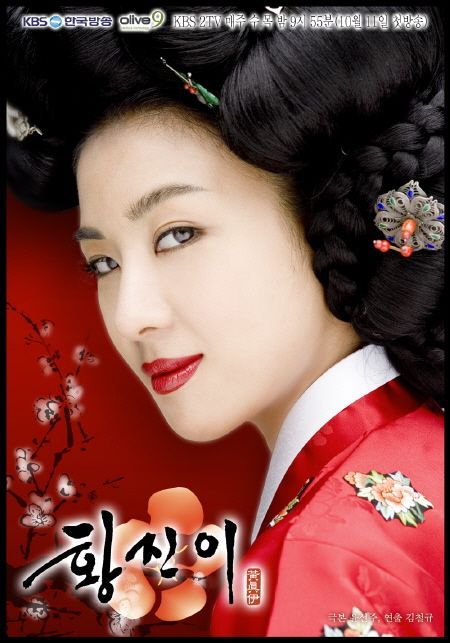
Thoughts on Hwang Jin-Yi, or…The Tragic Life of an Artist


So far all the dramas I’ve watched have taken place in modern-day Korea. This one was a bit of a departure, as it’s the first piece from the historical drama genre that I’ve watched. It’s about the life of Hwang Jin-Yi, a famous courtesan from the Joseon Dynasty era. From what I can tell, not much is actually known about the historical Hwang Jin-Yi, so her story is ripe for fictionalization.

Plot

I guess I ought to explain Jin-Yi’s position in life for anything here to make sense. In old-time Korea, there was a monarchy, as well as a caste system. Courtesans were among the low-born class, and they could not hold positions of power. What does a courtesan do? Essentially, the courtesans were high-class prostitutes who were trained in the arts. Noblemen could pay money to spend the night with them, and they would also perform dances and music at royal banquets. According to this drama, this way of life had pros and cons. On the one hand, they were sexual playthings, but on the other hand, they had the chance to express themselves artistically, which is more than most low-born people got to do.

If you plan to watch this drama and don’t want the first few episodes spoiled, avoid the rest of this section.

We first meet Jin-Yi as a girl who lives in a Buddhist monastery to be trained for a monastic lifestyle. She knows she was put there by her courtesan mother, whom she desperately wishes to meet, but her mother has never come for her. One day she and some of the other children take a trip to the market, and on the way back, Jin-Yi catches a glimpse of the courtesan dance troupe giving a performance. She is captivated by the performance, and eventually runs away to join the courtesans due to the artistic passion within her.

Once she joins the troupe she gets to meet her mother, Hyeon-Geum, who had put her in the monastery to prevent her from becoming a courtesan. By law, the daughter of a courtesan must become a courtesan too, but Hyeon-Geum hates living as a courtesan, and didn’t want her daughter to have the same life she did. Nonetheless, she’s happy to have the daughter she loves so much back, and the two of them establish a close relationship.

Jin-Yi proves to be an exceptional talent, and eventually becomes the most renowned courtesan in the country. Her journey is not an easy one, however. She has to deal with many tragedies and lost loves throughout her life, and she has to balance her passion for art, her human desire for love and her restricted role in society.

Writing and acting

I think the writing was good in that all the pieces of the story fit together well. The pacing was good, and this was the second drama I’ve seen where the ending didn’t feel out of place.

The acting was great too. Ha Ji-Won did an excellent job playing the title character, and the supporting performances were generally of high caliber too. There were a few courtesans whose acting I thought wasn’t particularly good, but they were less important to the story.

I recognized only one actor from a different drama, and that was the actor who played Gun-Woo in Beethoven Virus. He played one of Jin-Yi’s lovers here. I think he may actually be the reason I ended up watching this drama; it was recommended to me by someone on Italki to whom I had mentioned that I was watching Beethoven Virus. She probably thought of this one because of that actor.

Music

I thought the soundtrack to this drama felt odd. Some of the background music had a techno drum beat under stringed instruments, which clashed with the historical imagery. There was also a pop song that served as a sort of “love theme.” While the song was nice, and not “poppy” enough to be totally out of place, it still struck me as a tad bit strange. I guess that’s the style for most of these dramas, but if the soundtrack had been all orchestral music, it might’ve worked better in some ways.

There was one piece of music that I really liked, and it was part of the orchestral track. I guess it would’ve been the “dancing” theme, because we hear it when Jin-Yi is practicing her dancing. It was really beautiful.

Ending

I thought they got the ending just right. The last episode has a sad moment near the end, perhaps the part that moved me most, but Jin-Yi still manages to have a happy ending for herself. In short, the story of Jin-Yi as an artist is brought to its proper conclusion.

Observations

There was a very egalitarian message underlying much of this drama. The men Jin-Yi loved were of higher birth, making it impossible for them to be with her and be accepted by society. The most she could’ve expected to be under that system was a concubine. There were two men who were willing to give up their positions just to be with her, but they were generally seen as exceptionally good members of the upper ranks.

The noblemen were often shown in an unfavorable light. There was a minor character who was of noble birth, and purported to be a scholar, but he was actually lazy and sought personal pleasure above all else. He felt sure he could slide by in life due to his high-born status, despite his utter uselessness. Another noble character repeatedly tried to win Jin-Yi’s heart, but he was constantly humiliated by her rejections, because he was arrogant and insincere.

While this drama wasn’t completely one-sided on this issue, it did in many ways seem to be a repudiation of the historical caste system. It portrayed it as a structure where self-serving people could hold positions of power, while exceptional people were stuck in the lower classes. Not that that’s completely incorrect, I’m sure, but of course, the question is bigger than that.

I think the Korean language used in this drama may have been an archaic form, at least in some places, because at times I didn’t recognize the endings they used. It would make sense, since this takes place in the 16th Century or so, and they probably wanted to be true to the period. It should also go without saying that there was not a word of English to be heard.

This is definitely not a drama full of sunshine and roses. Several characters die during the story, and Jin-Yi has to deal with heartbreak several times. Another recurring message is that an artist must know pain to be able to touch others.

I recently learned  a word: “쪽박.” Literally it means “small gourd,” but symbolically it means “complete failure.” I’m not certain, but after watching this drama I have a theory on why that symbolic meaning might be. There’s a part where Jin-Yi takes to the streets to dance for the people, and she puts out a gourd to collect money. Perhaps the gourd symbolizes failure because it can be associated with begging for money.

Even though Jin-Yi was the central character, I think the character I enjoyed most was Hyeon-Geum, her mother. She had a very gentle, loving spirit, and even though she wasn’t involved in much of the action, she helped keep Jin-Yi grounded. She was the perfect embodiment of the aging courtesan whose spirit is barely hanging on after a rough life, yet manages to hold on to her artistic soul and love the people around her.

Final Thoughts

I thought this drama was OK, but as of right now, I rank it second-to-last on my list of favorite dramas. I had a hard time getting into it, and often my mind would wander as I was watching. It was very well-made, but for whatever reason, it just didn’t captivate me like other dramas have. With many dramas I couldn’t wait to watch the next episode, but with this one, I was usually ready to move on to something else by the time the episode ended.

I would say Hwang Jin-Yi is worth watching, but it may not always excite you.

Current Drama Ranking
        1 . Beethoven Virus
        2 . Unexpected You
        3 . Three Dads, One Mom
        4 . Lovers in Paris
        5 . Hwang Jin-Yi
        6 . Spring Day