Thursday, October 17, 2013

Thoughts on Dream High, or…K-Pop Stars Are More Credible Than You Think


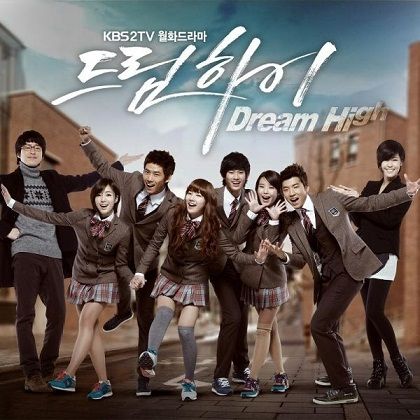
This was another drama recommended to me by a friend, and I guess I chose to watch it because I felt the other options I was considering were a bit iffy. This seems to be an extremely popular drama, as I’ve heard it referenced frequently throughout my years of engagement with Korean pop culture.

Plot

Spoilers ahead, in case you couldn’t have surmised it.

The main character we’re introduced to is Go Hye-Mi, a rich girl who is somewhat spoiled and also a classically-trained vocalist. Her talent is so highly-regarded that she gets accepted to Julliard. She also has a frumpy best friend named Yoon Baek-Hee who is nicknamed “Hye-Mi’s Slipper,” due to the fact that she follows Hye-Mi everywhere. Hye-Mi tends to take Baek-Hee for granted, though she finds her useful for various things she needs done.
Unbeknownst to everyone, including Baek-Hee, Hye-Mi isn’t really rich anymore. Her father’s business failed, and she’s only putting up a front. Early on, she gets a phone call from her father telling her that he’s fled the country due to his debts, and that he’s hiding overseas until he can get the money he needs. Due to lack of funds, Hye-Mi has to give up Julliard.

When they lose their house, it means that Hye-Mi and her younger sister have only one place to turn: Music teacher Kang Oh-Hyeok, a man who had had an affair with their mother just before she died. She hates Mr. Kang due to what he did, but she has nowhere else to go. Kang works at Kirin Art School, a training ground for potential pop stars, where he is struggling as the lowest-rated member of the faculty and receives little respect from his colleagues.

To make matters worse, the loan shark who her father owes money to is after Hye-Mi, because he believes he can get his repayment out of her. Hye-Mi ends up agreeing to attend Kirin Art School so that she can become a pop star and pay back the loan shark with the royalties she makes from her singing career. It’s not what she wants, but she has no choice. Of course, in order to maintain her front, she can’t tell anyone about this situation, not even her friend Baek-Hee.

When Baek-Hee and Hye-Mi go to audition for Kirin, they sing a song together. Hye-Mi, sure that her classical training makes this audition a mere formality, doesn’t take it very seriously, while Baek-Hee puts her heart and soul into her singing. She’s in for a surprise though, when Baek-Hee is accepted and she isn’t. Out of desperation (since she has a loan shark to repay) and arrogance, she belittles Baek-Hee in front of the judges and insists that she be accepted instead. It doesn’t work, and along with being rejected, she loses Baek-Hee’s friendship.

After the auditions are over, 97 new students are accepted, including Jason, a Korean-American, and Pil-Sook, an overweight girl with an incredible voice but decidedly non-pop star looks. However, the principal of Kirin plans to fill the remaining three admission slots with three specially-recruited students, including Hye-Mi, who he believes can still learn despite her shortcomings, Jin-Gook, a guy who had come to the auditions but had to forgo his place in line to help a friend, and Sam-Dong, a diamond in the rough who lives out in the countryside. He leaves Mr. Kang in charge of these three special recruits.

Shortly thereafter, the principal of Kirin goes on the road, and leaves one of the other administrators in his position. This administrator, however, doesn’t share his vision for the school, and intramural politics result in conflict between the special recruits and the regularly-accepted students. When the special recruits are banished to the college prep class, the place where students who don’t make the grade as performers are sent, it starts them on a mission to make their dreams come true despite the opposition they face from their peers and the administration.

Writing and Acting

When you consider that most of the actors in this drama are singers by trade, I’d say the acting was pretty darn good. The standard for acting in these dramas generally isn’t very high, but the stars here were up to the task. I thought that Miss A’s Suzy, who played Hye-Mi, was probably the weakest of the bunch. The actress who played one of the teachers was also a little weak sometimes, but other than those two, I thought they all generally did a good job.

The writing must have been good too, because I found myself really invested in these characters, moreso than I often am with these dramas. They must’ve either given great performances, or the writers did a good job of making them sympathetic and relatable.

There was one part that I felt left "suspend your disbelief" territory and entered "plot hole" territory. One of the characters is scheduled to perform in a showcase for various talent agencies, but he decides to blow it off. He ends up getting chosen by an agency anyway. I guess we're supposed to believe that because he's such a star pupil, he's in such high demand that it doesn't matter. I couldn't help but think that even the most talented people have to fight for every "in" they can get before they hit it big, and that it was too unrealistic not to get annoyed by it.

I felt that the ending, while nice, was a little anticlimactic. Don’t take that to mean it ruined the story in any way, just that they jumped into the future at the end and tried to navigate through so many changes in the characters’ lives that it was sort of hard for it all to sink in quickly enough. That’s a common gripe I have with these dramas, if you’ve noticed.

Music

Here are the songs I was able to identify. Since this drama was sort of a musical, there was lots of classic K-Pop referenced or performed. Because I love music so much, it really resonated with me. In some cases, these were songs the performers sang, in other cases, they were recordings:

Turtles – Bingo (Assa)
이장희 – 그건 너
Regina Spektor – On the Radio
“Music is my life”
“Chitty Chitty Bang Bang”
“And I Am Telling You I’m Not Going”
“거위의 꿈”
“Summertime”
심수봉 – 사랑 밖에 난 몰라
Ne-Yo – One in a Million
IU - Someday
Billy Mack – Christmas is All Around
현진영 – 흐린기억속의 그대
Mandy Moore – Only Hope
선예 - Maybe
Miley Cyrus – Fly on the Wall
Miss A – Bad Girl, Good Girl
부활 – 마지막 콘서트
Kelly Clarkson – Because of You
Usher feat. Nicki Minaj – Lil Freak
After School – Love Love Love
박진영 – 날 떠나지마
박미경 – 이브의 경고
김동률 – 다시 사랑한다 말할까
유재하 – 사랑하기 때문에
2AM – 죽어도 못 보내
소녀시대 – 소원을 말해봐 (지니)
이종용 – 겨울 아이
김건모 – 잘못된 만난
나비 – 마음이 다쳐서
하수영? – 아내에게 바치는 노래
T-ara – 왜 이러니
T-Max – Paradise
예성 – 너 아니면 안돼
봄.여른.가을.겨울 – 어떤이의 꿈
Madcon – Beggin’
윤종신 – 본능적으로
이적 – 하늘을 달린다
2PM – Heartbeat
이지연? – 난 사랑을 아직 몰라
박진영 – Honey
“Once Upon a Dream”
박진영 – 그녀는 예뻤다
긱스 – 짝사랑
The Buggles – Video Killed the Radio Star
Herbie Hancock – Rockit
A ringtone that sounded like “Temptation Eyes”
Europe – The Final Countdown
Enigma – I Love You, I’ll Kill You (The Cross of Changes)
Frontliner – Weekend Warriors
김세레나 – 새타령
Lil Wayne – 6 Foot 7 Foot
Fatboy Slim – Right Here Right Now
Cliff Richard – Congratulations
패닉 – 기다리다
Hammer – 2 Legit 2 Quit
Japanese rendering of the Mission: Impossible theme
이문세 – 붉은 노을
Arthur Baker – Breaker’s Revenge
A ringtone that sounded like “Heart and Soul”
달빛요정역전만루홈런 – 절룩거리네
IU – 좋은 날
2 PM – I’ll Be Back
Dal*Shabet – Supa Dupa Diva
Radiohead – Creep
폴라로이드 – 함께 했던 시간들은 영원 할 수 없다
Super Junior – U
신승훈 – 보이지 않는 사랑
이종국 – 사랑스러워
박진영 – 너의 뒤에서
현철 – 봉선화 연정
김건모 – 스피드
룰라 - 날개잃은천사
클론 – 꿍따라샤바라
“My Valentine”
Irene Cara – Flashdance (What a Feeling)
IU – Marshmallow
임정희? – 가지마
창민? – 사랑하면 안될까
Mighty Mouth feat. Soya – 톡톡
Ashlee Simpson – Rule Breaker
Minnie Riperton – Loving You
2 PM – Electricity
“Star Wars” theme
IU – Dreaming
Beyonce – Single Ladies (Put a Ring on It)
Jay-Z – D.O.A.
Tim – 자장가

English

Since the character of Jason was a Korean-American (though it was clear the actor didn’t really speak English), many of the phrases in quotes are things he said.

“One minute to start the show. Ready? Standby…” world star, break shot, poster, slipper, focus, reception, system, “bingo!”, “is it my turn already?” “Sorry” “I said, is it my turn?” “I am sorry!” “it’s going to be a while for you, number 1200 just went in,” “Thanks, Miss Sushi, will you let me know when it’s my turn, please?”, unique, miniskirt, cover, only one, “just a moment,” gentle, “I’m just saying that mine is mine. Do you have any problem with it?”, “speak slow,” pendant, D flat, D natural, stretch, step by step, showcase, fashion terrorist, chord, money chord, feeling, “lady first,” data, “it’s undecided,” terror, Cinderella, wave, unison, “this is where the real stuff is,” big size, high five, flat, total, multi-player, “yo, what’s up?”, complex, kilogram, “long time no see,” “dance of the year,” “bye,” “welcome home,” country boy, dynamic, top class, “are you trying to teach me?”, “you really bug me!”, angry young man, “Love High,” so-so, “Dry and High,” “Hey you! What’s your name?”, “Come on!”, “Sing together!”, “present for you,” total package, “my friend,” girlfriend, triple A plus, market, “all A,” back dancer, “I’m here,” mission, “thanks to,” carnation, fan service, “yes sir,” “that’s enough, shut up now,” “oh, Julie…I gotta go now…yeah, I have a test…I miss you too…I love you, bye,” gentleman, native, music video, top 6, latex, title, albatross, congratulations, chic, language course, “I’m ready,” Star Today, stewardess, flash mob, escort, “Are you sure? Are you ready to go?”, “I always am,” family restaurant

Hey, I Know That Person

One of the villains from City Hunter played Jin-Gook’s father. Interestingly enough, that was the only person I recognized from a previous drama I’d watched.

Other Observations

I never know what to make of Koreans and their relationship with poop. When I was in Korea, it seemed like it was something they openly talked about like it was no big deal, but one time I just alluded to bathroom stuff and a Korean person seemed offended, so I dunno. There were two defecation jokes in this drama though. During the auditions, they show a guy in a toilet stall, complete with pooping sound effects. Yeah, it was gross. Later, when Hye-Mi goes to the country to meet Sam-Dong, there’s a scene where he takes her to use the outhouse, and she has to sing a song so he doesn’t hear her pooping. A little bizarre for my tastes, but that seems to be a common thing in Korea.
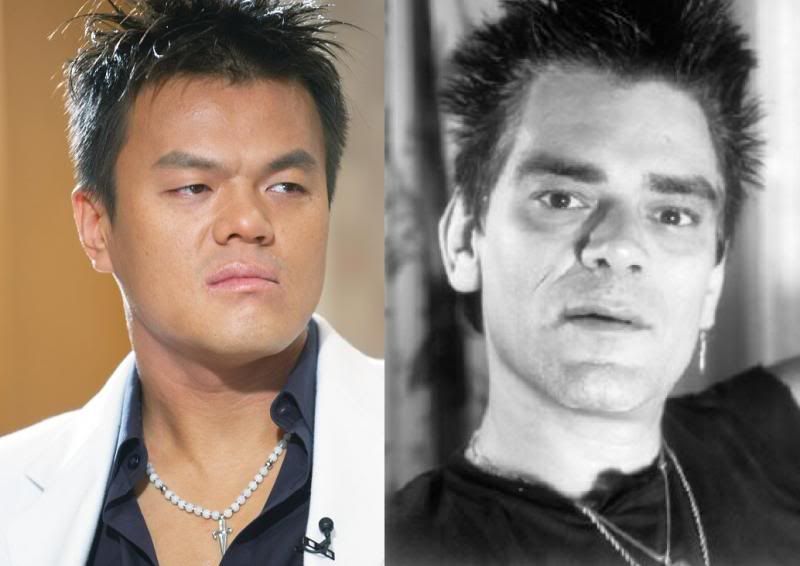
The legendary Park Jin-Yeong, aka JYP, appears in this as a teacher. Apparently he had a lot of creative input too, such as selecting the songs and even writing the original songs for the characters. While watching this, I noticed that he looks kind of like Dee Dee Ramone. It’s funny how he doesn’t exactly have a typical Korean face, and they made references to it at various points in the drama. In one case he was told he looked like an illegal immigrant.

The noraebang scene is becoming a cliché in these dramas. Still, it’s so much fun, how can you not love it?

In so many of these dramas there are references to Asian comics. I’ve now seen it so many times that I sense it’s a prominent piece of Korean pop culture. My lack of knowledge in that area leaves me outside the loop.

I had actually seen a scene from this drama on YouTube a long time ago and forgotten about it. I translated the song “붉은 노을” (Red Sunset Glow) by Lee Moon-Se, and in the comments for the YouTube video people were saying that they knew the song from Dream High. I looked it up and saw the scene where Hye-Mi and Sam-Dong sing the song for money on the streets. The name of the drama it was from didn’t stick with me, so when I saw that scene I suddenly realized I’d seen it before.

Pil-Sook, the overweight girl played by IU, was my favorite character. She was so cute! She and Jason were a rare couple I was strongly pulling for to end up together. I mean, you figured they probably would, but you never can be sure. I was disappointed when they flashed to the future and it seemed that in the long run they ended up just being friends. I was hoping they’d get married.

Final Thoughts

Since this drama is popular with K-Pop fans, at first I figured it would be a bit corny. During the first few episodes, I wasn’t dissuaded from that belief. It seemed lightweight and forgettable in many ways, so I figured it probably wouldn’t go down as one of my favorites. Then, a strange thing happened. As I watched it, it gradually drew me in more and more. Suddenly I was getting emotional along with the characters and cheering them on at pivotal moments and I realized, “hey! This drama is really special!” 

I think some of it may be attributable to my love of music, since I was able to feel the characters’ emotions through the songs that accompanied their moments. Like with Beethoven Virus, the music gave it that extra something.

Also, I thought I should note that despite some of the cartoonish comedy, this drama did deal with some serious issues late in the series. Early in the series there’s a minor character who attempts suicide by jumping off a building, but he ends up landing on a car and sustaining some minor injuries. It was almost played for laughs. That made me think this drama was too fluffy at first, but later in the series, there’s a main character who goes to the roof in an apparent contemplation of suicide, and it’s no laughing matter then. We find out that this character was tormented by a very painful secret, and it definitely wasn’t kids’ stuff. I appreciated that they went beyond the fluff and tackled a real issue.

Overall, I would rank this one among my most highly-recommended dramas. I’ve decided to rank it between 49 Days and Unexpected You. It didn’t leave me in awe like 49 Days did, but Unexpected You, as much as I liked it, didn’t have characters who gripped me as much as this one did.

Ranking:

      1.       Beethoven Virus (5)
      2.       City Hunter (7)
      3.       49 Days (9)
      4.       Dream High (13)
      5.       Unexpected You (4)
      6.       Sandglass (11)
      7.       Three Dads, One Mom (2)
      8.       Delightful Girl Choon-Hyang (10)
      9.       Ad Genius Lee Tae-Baek (12)
      10.   Lovers in Paris (1)
      11.   Hwang Jin-Yi (6)
      12.   Spring Day (3)
      13.   Protect the Boss (8)

Monday, September 23, 2013

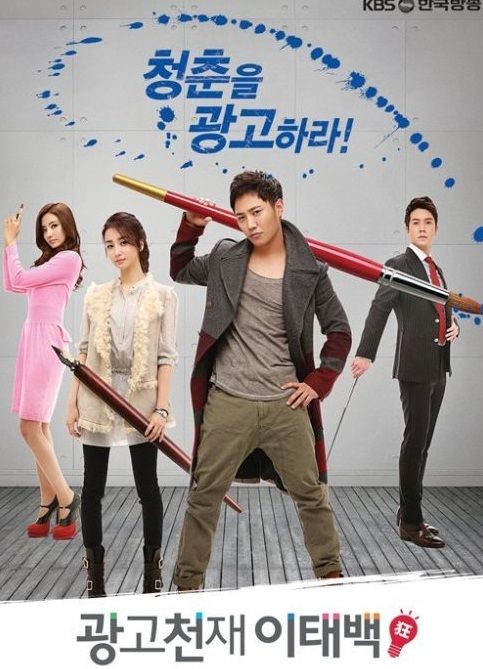
Thoughts on Ad Genius Lee Tae-Baek, or…Horatio Alger Wants to Sell You Stuff


Another drama finished, another writeup for my blog. I had a big realization while watching this drama, which I’ll discuss later. As far as whether I liked it, I’m going to have to give it a mixed review.

Plot

As always, beware of spoilers and all that.

Lee Tae-Baek has only a high school education, and he lives from paycheck to paycheck as a manual laborer for a sign company. However, he is determined to break into the world of advertising, despite the uphill battle a man of his limited credentials faces.

Baek Ji-Yoon is the daughter of a chaebol president, but she has a poor relationship with her father, and wants to be an ad copywriter like her mother was. She gets an internship at a prominent agency called Geumsan Ad without any of her father’s connections. In fact, no one there even knows who her father is.

Tae-Baek and Ji-Yoon meet when Tae-Baek is one of the workers assigned to hang a large banner for Geumsan. They strike up a friendship and develop an ad campaign for Geumsan together. Ji-Yoon is hoping to be noticed for her copywriting skills, and Tae-Baek is hoping the company will hire him. They submit their campaign proposal, but when it ends up being used, the two receive no credit for it. Since they have no way to prove that the ad team didn’t come up with the same idea themselves, there’s nothing they can do.

When Tae-Baek’s boss at the sign company goes bankrupt, Tae-Baek finds a sign-maker from another neighborhood, Ma Jin-Ga, whose work is known to be especially effective at increasing his clients’ profits. When Tae-Baek challenges him to a sign-making contest and loses, Tae-Baek asks to become his protégé, so he can learn from the master. Ma reluctantly accepts.

It’s later revealed that Ma used to be a top ad man, but was blackballed from the industry for blowing the whistle on one of his clients’ products. Tae-Baek’s prodding helps him get back in the game, this time starting from the ground up. Ma, his three employees and Tae-Baek form their own small ad agency with the hopes of building themselves up into a large one. Ji-Yoon, despite interning for a competitor, supports them because of her friendship with Tae-Baek.

Meanwhile, BK Group, the chaebol run by Ji-Yoon’s father, is trying to acquire Geumsan ad, which leads to a series of tangled connections and interests.

Writing and Acting

As with many comically-toned dramas, the acting wasn’t anything to write home about. There were several actors I knew from previous dramas (see below), but their acting didn’t impress me as much here as they did in previous roles.

The writing was typical comic drama writing, and the ending felt a little too neatly wrapped-up, as is often the case. The final scene didn’t really do a whole lot for me, but maybe that’s because I was tired when I watched it.

Music

Here’s the stuff I was able to identify:

Voice Man – 차가운 커피
성시경 – 거리에서
어반자카파 – 사랑오후
E.D.E.N. – Never Cry
박성철 – 무조건
Dal*shabet – 있기 없기
Girls Day – 나를 잊지마요
Toxic – Just a Man in Love
Andy Williams – Can’t Take My Eyes Off You(Shazam said Andy Williams, but it sounded like a different singer)
Roy Orbison – In Dreams
박지윤 – 그대 그리고 사랑
Ivy – 바본가봐
Chet Baker – I Fall in Love Too Easily
Piano version of “Imagine.”
ABBA – Dancing Queen
Zebra – Black Orpheus
Susan Jacks - Evergreen
The Archies – Sugar, Sugar
Amanda Mair – Skinnarviksberget
Piano version of “Fly Me to the Moon.”
John Mayer – All We Ever Do is Say Goodbye
“You Belong to Me”
Dave Barnes – Mine to Love

Ji-Yoon’s ringtone sounded like “Loving You” by Minnie Riperton.

There were some Korean songs played on vinyl records that I couldn’t identify. It drove me nuts, especially since I kind of liked one of them.

One of the drama-specific pop songs had the repeated lyric: “Broken my love, broken my love…” It sounded like a poor translation from Korean.

English

Lots of jargon words are the same as in English, presumably because the ad industry didn’t exist in Korea before being introduced by the Western world. In fact, there were several times when the characters would use jargon, and the definition of the word would pop up on the screen. Since many of the jargon terms were English words, Korean listeners might not be able to infer the meanings.

Words: idea, standby, “oh my God,” intern, fact, poster, global brand, “new revolution,” copy, concept, creator, copywriter, “the end,” lobby, narrator, portfolio, copier, promotion, sky lounge, “thank you,” simple, “terrible idea,” view, scooter, campaign, spark, top class, “good job,” point, timed sale, “sales promotion,” “go,” character, SWOT – Strength, Weakness, Opportunity, Threat, top star casting, role model, loser, scrap, package, USP – Unique Selling Proposition, stuntman, hip-hop, marathon, full course, climbing, “you’re welcome,” “understand?”, pacemaker, main, copy, casting, prime time, “perfect!”, data, “Made by GRC,” documentary, royal family, action, “move!”, exciting, trademark, trend, sense, insider, marketing plan, global marketing, “shut up,” chandelier, win-win, synergy, healing food, positioning, homeground, line, zero, company, “bravo!”, pre-production, blue iris, pink gerbera, clary sage, marjoram, spaghetti, image match, “ready…action!”, reality, “cut!”, business partner, handling, baby lotion, story, atopic, diet, client, pitch, “are you ready?”, sample, “lotion time!”, allergy test, “coming soon,” Giant, old, gorilla, “hi!”, “I’m sorry,” gorgeous, partnership, fashion leader, trend setter, “Presentation Killer,” “Miss Gong,” “are you crazy?”, “why not?”, terroir, full-bodied, cheerleader, paradigm, antique, Dream Team, brand image, art, “Change the life, change the furniture,” same-same, recipe, equal, media group, new media, “mother’s soup,” freelance, troublemaker, “very, very good news,” zombie, crea-sumer marketing, zipper bag, love letter, data, eco-bag, laser, cocktail, aluminum, couple ring, wedding planner, Fosbury Flop, gold medal, release, target, jungle, call, camping, merit, hidden card, helmet.

Ma Jin-Ga liked using English phrases, so many of these were from him.

The taglines for several of these ad campaigns were in English too, which was an interesting phenomenon. The Geumsan employee who said two of them was played by Han Chae-Yeong, an actress who spent time living in the U.S. and presumably speaks English, but her pronunciation had a distinct Korean accent.

Hey, I Know That Person

Choi Jeong-Woo, who played Ji-Hyeon’s father in 49 Days and one of the villains in City Hunter, appears here.

Jo Hyeon-Jae, who played Gang in 49 Days and Soo-Hyeon in Three Dads, One Mom, played Addie Kang, an executive who figures prominently in the story. This is the third role I’ve seen him in where (spoiler!) he almost gets the girl but in the end doesn’t. I wonder if there’s one where he does get the girl because…come on, man! The dude needs some love! Also, it’s interesting that in 49 Days Choi Jeong-Woo played the father of the woman he was in love with, but here Choi Jeong-Woo was his father.

Han Chae-Yeong, who played Choon-Hyang from Delightful Girl Choon-Hyang plays a role here. I didn’t recognize her at first because she’s so much older here than she was in that drama. As mentioned above, she spoke a few phrases in English, and while she pronounced them fairly well, there was a distinct Korean accent.

Finally, Jang Yong, who gave great performances in Spring Day and Unexpected You, and who I also declared as my favorite Korean actor, is here as Ji-Yoon’s father. In Spring Day he was a man tormented by the past, in Unexpected You he was a father rediscovering warmth in his life thanks to the son he was reunited with, and here he was a powerful businessman who, as is always the case in these dramas, is greedy and heartless. It was interesting to see him as more of a villain here than he was in his previous roles. As always, I thought he gave the best performance of the bunch. He’s a true master.

Other Observations

The only reason I watched this drama is because of Seon-Hwa from Secret. Yep, she has a role as Tae-Baek’s younger sister. The first time they show her, she’s doing the dance to Secret’s song “Madonna” and singing part of it. Then later, she was singing “Magic” to herself. In-jokes! Ha! And if you think that’s clever, at the end of the series, her character announces her intention to join a girl group, and when asked what the name of the group is, she answers “it’s a secret.” Ha! I kid, though. It’s kind of cool when you “get” the jokes that some people wouldn’t.

She wasn’t the only K-Pop star in the series. Ah-Yeong from Dal*Shabet was also in it as an employee of President Ma. So of course, they had to have musical scenes. They had an obligatory scene with them singing in a noraebang, though for some reason Ah-Yeong didn’t sing in that one. Later the two of them were present for a sing-off event, where they fought over the microphone. Unfortunately, I didn’t recognize any of the songs anyone sang for that.

There was a guy in one scene who looked like a Korean Al Franken. I have no other comment on that, I just thought it was funny.

One of the members of Ma Jin-Ga’s team is a guy named Hassan, who, if it wasn’t obvious by the name, isn’t Korean. He was from Bangladesh, and the fact that he was a foreigner made its way into several comments. One guy laughed when he saw his picture. He was apparently a Muslim too. Not that I have anything personal against Bangladeshis, but I have fears that we see characters like this because the Korean people are slowly being inured to the Trojan horse of “diversity.”

There’s another scene where a woman talks about two foreigners in the country who are discriminated against because of the color of their skin, and how embarrassing it is for Korea that people do that. Those who know my views on race know that I support nationalism for all races, which includes the right to keep one’s nation pure and maintain a distinct identity. I think the Korean people will be happier long-term if they reject diversity and keep foreigners an extremely small minority. Not that they should be cruel to foreigners among them, just that it probably is best to keep them at an arm’s length. I hope Korea makes the right decision.

Because three of the four lead characters had previously spent time in America, they frequently talk about going back to America as if it were some eternal option. It’s further confirmation that most of the world looks at the U.S. as an open land for anyone who wants it. Not that I have a problem with Korean people in America, it’s just that I know such a view doesn’t make the America we know sustainable in the long run.

Final Thoughts

This drama was the tale of two halves for me. The first half…awesome. It focused on Tae-Baek and his dogged determination to succeed, and given that he’s such a likable character, you couldn’t help but root for him. That was exciting to me. Watching them get their business started and wondering how they’d get inspiration for ads was a plotline that kept me interested.

In the second half, Tae-Baek and Ji-Yoon’s relationship developed more, and the various love storylines became the focal point of the series…not so awesome. After a while, you see these draggy scenes with people trying to figure out what to say about how they feel and you start to think you’ve seen it a million times before. When it became like that, I started to get bored.

While watching this drama, I realized the type of viewer I am: I like good stories, but not the usual cliché-filled love stories. The dramas I’ve enjoyed the most weren’t centered on the love relationships of a few characters, but on something bigger. Beethoven Virus had a love story, but it was pretty much a subplot. The bigger story was the orchestra and its members’ personal growth. City Hunter had romance, but the bigger story was the mission to take down these corrupt politicians. 49 Days had love in it, but the real plotline was about Ji-Hyeon trying to find the three tears so she could live again. And so on.

On the other hand, look at the ones I’ve enjoyed the least. Protect the Boss bored me to tears because it was an unending string of melodramatic scenes where people were trying to confess their feelings and I just couldn’t get into it at all. In fact, I recall that the character I found most interesting was Ji-Heon’s father, who didn’t figure in any of the love stories. I watched Spring Day about two years ago now, but I remember how “blah” it felt to me. And what do you know? It revolved around the romantic aspirations of the characters. Hwang Jin-Yi was mainly about the titular character’s various loves, so that often bored me too.

I think you get the idea. I feel like in the future it’d be best for me to seek out dramas that aren’t too love story-centric. I can handle a little bit, as long as it doesn’t dominate the plot. For right now, I think I’m going to take a short break from watching dramas, because sometimes they can be too much of a time commitment.

As far as the ranking goes, I’ll have to give this one credit for being really good initially, even if I got bored with it later on. I always wonder if I should give myself more time before ranking the drama, because when it’s fresh in my mind I might be more inclined to overrate it. However, I think my feelings on this one are clear enough that I can properly place it in the lower middle.

Ranking:

     1.       Beethoven Virus (5)
     2.       City Hunter (7)
     3.       49 Days (9)
     4.       Unexpected You (4)
     5.       Sandglass (11)
     6.       Three Dads, One Mom (2)
     7.       Delightful Girl Choon-Hyang (10)
     8.       Ad Genius Lee Tae-Baek (12)
     9.       Lovers in Paris (1)
     10.   Hwang Jin-Yi (6)
     11.   Spring Day (3)
     12.   Protect the Boss (8)


Thursday, September 5, 2013

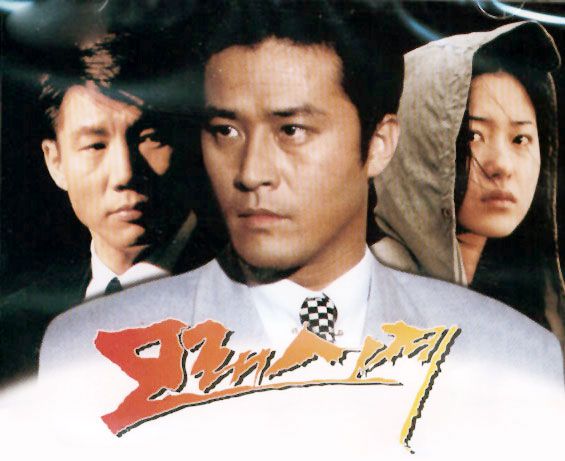
Thoughts on Sandglass, or…History Ain’t Always Pretty


For my most recent drama I stepped into the Wayback Machine. Of the first ten dramas I watched, the oldest was 2004’s Lovers in Paris; this one beats it by a full nine years. I only watched it on the recommendation of The Korean at the blog Ask a Korean, and knowing what I do about his political views, I’m not surprised he liked this drama so much. Thankfully though, this drama wasn’t as politically preachy as I was expecting it to be. I guess I should explain it.

Plot

This drama centers on three characters: Tae-Soo, Woo-Seok and Hye-Rin.

Tae-Soo’s father was a Communist who died before he was born, and he was raised by a single mother who runs a tavern/brothel. He’s a tough kid who frequently gets into fights, and his superior fighting ability gets him recruited by gangs, though he’s determined not to join them. Tae-Soo plans to join the military after high school, but when the time comes for him to enlist, he’s rejected because of his father’s Communist ties, and his mother dies in an accident shortly thereafter. With no other options, he joins the gang and lives his life as a thug. Tae-Soo doesn’t like being a criminal, but it’s the only thing he’s able to do.

Woo-Seok is a boy who becomes Tae-Soo’s best friend in high school. Woo-Seok’s father is a poor farmer who deals with hardships because of the country’s corrupt dictatorship. Woo-Seok’s father recognizes his intelligence at an early age and encourages him to study hard, so that he can become a prosecutor and clean up the corruption. Woo-Seok gets accepted to university after high school, where he studies law diligently. Woo-Seok is highly principled and honest, and everyone who meets him respects his integrity.

Hye-Rin is a woman that Woo-Seok meets in college. The daughter of a wealthy casino magnate, she defies the expectations of her economic class by joining the student protests against the dictatorship. She and Woo-Seok develop a close friendship, but it never quite blossoms into a full romance. Hye-Rin is very outspoken and independent, and she is frequently at odds with her own father, who’s involved with many shady business dealings.

This series follows the lives of these characters from the mid-1970’s to the late-1980’s, a turbulent period during which Korea experienced assassinations, military coups, martial law, student protests, and eventually democracy.

This drama is notable in Korea for its cultural significance. At the time of its airing, democracy was still new to the country, and the people were still coming to terms with their recent history. It was one of Korean television’s most watched programs ever.

Writing and Acting

Both were of a high caliber. Unlike the corny acting in most modern-day dramas, the performances in this one were the work of people dedicated to their craft.

The writing was good too. The story flowed well and felt like it had a clear direction, and the final episode especially was great drama. While it was to be expected, I was a little disappointed that this series was mostly devoid of humor, as it dealt with serious issues that shaped Korean history. There were a few parts that made me laugh, but it might’ve been my own misinterpretations of the situations.

Music

There were three recurring musical themes, if I can recall correctly. This was from the days before a Korean drama had an album’s worth of pop songs produced for its soundtrack. I don’t believe any of these songs was made specifically for the drama. In fact, one of them was in Russian.

There was also a classical music version of “Yesterday” in the background for one scene.

English

Words: Dealer, boiler, casino, seminar, madam, melodrama, circle, bonus, tank, “nice shot!”, slot machine, poker, tip, roulette, smog, death mask, skid mark, tire, “what kind of dealer are you?”, VIP room, Miss Lee, paint, housekeeper, night club.

The casino in this drama catered to foreigners, so there were several scenes with people speaking English, as well as Japanese.

There was an early scene with two men at a gambling table, and the dealer spoke English to them even though the men were both Korean. He sounded like he had a British accent.

In a different casino scene, there were people gambling whose accents sounded American, but their acting was terrible, because the dialogue sounded wooden.

They also spoke English to a casino patron that was caught cheating. Subtitles were included because the pronunciation was so terrible.

Hey, I Know That Person

The actress who played Jeong-Eun in Spring Day played Hye-Rin here. Even though this was ten years before Spring Day, her credits list no other roles between those two. I found out that it was because she got married and was retired from acting during that time. She later got divorced and returned to acting with Spring Day. It was another case of me not recognizing her at first, but once I saw her face at a certain angle I realized it was her. She looked very different here.

The actress who played Baek-Moo in Hwang Jin-Yi was here as Tae-Soo’s mother. She was much younger, but I knew her face looked familiar when I saw it.

Director Choi from Lovers in Paris had a small role too, as Woo-Seok’s boss.

Other Observations

Several fight scenes looked really fake. In an otherwise well-made drama, that was perhaps the one production aspect that I really had a gripe with.

The first three episodes each centered on a different character. It reminded me of LOST.

I was surprised at some brief nudity: At an office where military medical exams are being given, they show a line of men dropping their drawers and bending over behind a translucent curtain. I’d be surprised if they showed that today. This was 1995. Maybe it aired at a late enough hour that it was allowed, or something. Or maybe they figured they didn’t matter so much, because they were just butts.

There were so many darkly-lit scenes that it was sometimes hard to tell what was going on. I found that this drama was best watched in the dark, because there’d frequently be a glare otherwise.

They mixed archive footage of some of the historical events depicted with the dramatized stuff. It seemed obvious which was which, but it was a good effort.

There were stylistic differences from modern day dramas. Most dramas these days end with a cliffhanger and then pick up at the moment the last episode left off in the next one. This one didn’t do that. Sometimes it wasn’t clear if I was watching the correct episode, because it would be beginning in a completely new scenario. I never realized how accustomed to that construct my brain was.

Another difference was that it almost felt like a movie. The film style, the intense drama, the lighting, it all just had a different emotional texture than most dramas today.

I saw a parallel between Hye-Rin and Jeong-Eun from Spring Day, and I don’t know whether it was intentionally put in there due to the fact that the same actress played both parts. Early on in Spring Day, Jeong-Eun is voluntarily mute, and Eun-Ho helps her break out of her self-imposed silence by forcing her to get in touch with her emotions and let out a cry. In Sandglass, Hye-Rin is in shock after a traumatic experience at one point, but another character helps her break out of it in a similar fashion. It seemed like it would be more than coincidental, but for all I know it could’ve been.

There were four different scenes with people losing their parents to death. In fact, (spoiler alert) Woo-Seok’s mother is the only parent of the three main characters who isn’t dead by the end.

It’s interesting to see gangsters who don’t use guns, as Korea doesn’t allow private gun ownership. In many scenes where I naturally expect people to pull out their guns, it doesn’t happen. They beat people with sticks and pipes, stab them with knives and hit them with cars, but no guns.

Inconsistency: In the final episode Tae-Soo’s birthdate is given as 1957, but in the first episode it’s given as 1954. That annoys me.

Final Thoughts

This is just the impression I get from my observations of Korean culture, but this drama supports it: Koreans have this tendency to fetishize democracy. There’s an early scene where a young Woo-Seok reads out loud a passage from a book that says democracy is the perfect system because everyone has an equal voice and no one is oppressed (I guess the phrase “tyranny of the majority” was never introduced to them).

That type of thinking works in a society high in social capital (like Korea), but in the U.S., where there’s so much diversity diluting a sense of national unity, essentially reducing us to warring factions, some of us view democracy as its own worst enemy. Honest left-wingers love democracy because it’s egalitarian in theory. The left-wingers with insidious intent know that it’ll collapse once people can vote themselves into bankruptcy, forcing big government to take over.

I believe the reason Koreans love democracy so much is because it took so long for them to truly achieve it. For many years it was their goal as a nation, and now that they have it, they can’t help but celebrate it. So far it seems to have worked out well for them, so I guess there’s no reason they shouldn’t. I just hope they’re aware that democracy has failed many times, and that it requires the right societal configuration to be successful, so it’s hardly a perfect system.

As for my ranking of this drama, I’m a bit conflicted about where to put it. At times this drama kind of bored me, and other times it really excited me. I feel like one would have to be Korean to truly appreciate every aspect of it, so while it may be the most historically significant drama I’ve watched so far, it wasn’t the one I enjoyed the most, which is what my ranking is based on. All things considered, I think I’ll put it in the upper middle of my rankings.

Ranking:

      1.       Beethoven Virus (5)
      2.       City Hunter (7)
      3.       49 Days (9)
      4.       Unexpected You (4)
      5.       Sandglass (11)
      6.       Three Dads, One Mom (2)
      7.       Delightful Girl Choon-Hyang (10)
      8.       Lovers in Paris (1)
      9.       Hwang Jin-Yi (6)
      10.   Spring Day (3)
      11.   Protect the Boss (8)