Saturday, July 28, 2012

Korean Music Time! #2: 조용필 - 눈물로 보이는 그대

Hey everyone! I feel like I should write on this blog more often, but I don't often feel like it. I'm still adjusting to my job, because things are constantly crazy there. Maybe I'll go into more detail later, but right now I don't feel like recapping all the frustrations. I'd rather share something that I find personally rewarding: I translated another song!

It's from the same album as the last song I translated, and this one's a bit sadder. I offer the usual disclaimer: I'm not a Korean speaker, so my translation shouldn't be seen as definitive. It was the best I could do using dictionaries and grammar reference sources. Take a listen:


눈물로 보이는 그대
You, Looking Like Tears

(Verse 1)
누가 바람을 보았나
Who saw hope?
나는 바람을 보았네
I saw hope
당신이 잊고간 손수건 작별 인사의 손진같네
You leaving forgetting a handkerchief is like a goodbye gesture
가슴을 시리게 적셔오는 손수건의 눈물자욱
The thick tears of the handkerchief are coldly soaking my heart
바람처럼 사라져간 당신의 추억이
Your memory is like my hope that disappeared
머무를 때는 보이지 않고 떠난 뒤에야 보이네
It didn’t look that way when you were staying, but now that you’ve left, well, it does

(Verse 2)
누가 사랑을 보았나
Who saw love?
나는 사랑을 보았네
I saw love
이별은 쉬운 것이었는데 어려운건 혼자 남는것
A farewell shouldn’t be easy, but remaining by myself is difficult
그것이 사랑은 아니던가 이제야 알것 같은데
Perhaps it wasn’t love, at last I think I know that
그리움을 아는 이는 나의 슬픔 알리라
My sadness tells me I still have that old yearning
떠난 뒤에야 보이는건가 눈물로 보이는 그대
Did it only look that way after you left? You, looking like tears

(Closing Refrain)
그리움을 아는 이는 나의 슬픔 알리라
My sadness tells me I still have that old yearning
머무를 때는 보이지 않고 떠난 뒤에야 보이네
It didn’t look that way when you were staying, but now that you’ve left, well, it does
떠난 뒤에야 보이는건가 눈물로 보이는 그대
Did it only look that way after you left? You, looking like tears
떠난 뒤에야 보이는건가 눈물로 보이는 그대
Did it only look that way after you left? You, looking like tears

While translating poetic material is difficult, I enjoyed the challenge. There are several parts where I'm uncertain about the meaning, but at least I think I was able to come up with something that makes sense. I tried to stay true to the literal meaning as best I could, but when you're dealing with two very differently-structured languages that's impossible to do perfectly. There were a few parts where I changed the wording a little to make the intent clearer (at least, what I think was the intent), and I'm happy with the way they turned out.

One thing that can make translation difficult is that different languages use words differently. We might say that two words correspond to each other, but the contexts in which Korean speakers use their word might be different than the ones in which we English speakers use it.

For instance, look at the line that says "the thick tears of the handkerchief are coldly soaking my heart." The word I translated as "heart" is "가슴," which literally means "chest." I've noticed that several songs use that word similarly to the way English songs might use "heart," i.e. representing a person's emotional core. Korean also has the word "마음," which can also be translated as "heart" in the "emotional core" sense, but it literally refers to a person's mind. Our English "heart" has a little of both meanings in it, as it's essentially a metaphor, but it seems that Koreans choose their word depending on how they spin the metaphor.

I think in this case the word "가슴" (chest) was used to give the line a double meaning. One might put a handkerchief inside a pocket against his chest, and in this case the handkerchief is still soaked with the woman's tears, so the man feels the wetness. However, it also pains him internally, because it reminds him of the love he lost. In that sense, both his physical chest and his emotions are affected by this wet handkerchief. At least, that's how I interpret it. That interpretation, of course, relies on the correctness of my translation, which isn't a certainty.

I've already begun translating another song, and instead of Jo Yong-Pil, it'll be by Jang Yoon-Jeong next time. I've already run into a slight roadblock, as there's a line I can't make much sense out of, but perhaps I'll figure it out eventually, just as I did with the difficult lines in the first two songs I translated.

Sunday, July 1, 2012

Korean Music Time! 조용필 - 여행을 떠나요

I've been kind of lazy in my attempts to learn Korean lately, since I have so many interests that it's hard to stay focused on it. As much as I always enjoy myself when I study it, baseball research and blogging don't happen by themselves.

As a Korean music fan though, I've found that trying to translate songs can be a lot of fun. When you can see how different words relate to each other and form sort of a "story," it feels like an exciting revelation. It just so happens that one of my favorite artists, 조용필 (Jo Yong Pil), has a really awesome song that contains mostly short phrases and sentences. First of all, take a listen:


Rocking, no? This one's always fun to do in the song booth.

Anyway, I liked it so much that I decided to try to translate it, mostly using dictionaries and other such references, though I had help with a few lines from my old boss, Mrs. Kim. She didn't actually know the song, because she said she only listens to classical music. I figure if I can listen to a song and know what each line means, that can bring me closer to understanding this language. I saw a YouTube video of a Caucasian girl speaking Korean, and in the comments, she told people that one way she learned was from translating songs she liked. Hey, if it worked for her, maybe it'll work for me.

Anyway, here's my best attempt at translating. It'll probably be laughable to any Korean speaker who comes across this blog, but I think I have the basic idea of the song. I'll format it the same way that The Korean of the famous blog Ask a Korean does with his music posts, since it looks nice and neat.

여행을 떠나요
Let's Go on a Trip

(Verse 1)
푸른 언덕에 배낭을 메고
Toward a green hill, carrying a backpack
황금빛 태양 축제를 여는
Bright yellow sun above the festival
광야를 향해서 계곡을 향해서
I face the prairie, I face the valley

(Verse 2)
먼동이 트는 이른 아침에
At the break of dawn, early in the morning
도시의 소음 수많은 사람
The noise of the city, lots of people
빌딩 숲속을 벗어나봐요
Let's escape this forest of buildings

(Chorus)
메아리 소리가 들려오는 계곡속의 흐르는 물찾아
The sound of an echo can now be heard, we search for the valley's flowing water
그 곳으로 여행을 떠나요
Let's go on a trip to that place
메아리 소리가 들려오는 계곡속의 흐르는 물찾아
The sound of an echo can now be heard, we search for the valley's flowing water
그 곳으로 여행을 떠나요
Let's go on a trip to that place

(Verse 3)
굽이 또 굽이 깊은 산중에
Bend after bend toward the deep mountain recess
시원한 바람 나를 반기네
The cool wind welcomes me
하늘을 보며 노래 부르세
As we look at the sky, let's sing together

(Chorus)

(Solo)

(Verse 3)

(Chorus)

(Bridge)
여행을 떠나요
Let's go on a trip
즐거운 마음으로
With pleasing thoughts
모두 함께 떠나요
I leave with everyone

(Chorus)


Like I said above, anyone who's fluent in both English and Korean will probably have a chuckle at my clunky translation. I only know really basic Korean, so don't take this to be perfect. There are more than a few parts I'm not completely confident of.

I attempted to stay true to the literal meaning as best I could, but in a few cases I thought it preferable to fix it up a bit so it'd sound better in English. For instance, the line in the chorus, "그 곳으로 여행을 떠나요" would probably be better translated as "To that place let's go on a trip," but that's kind of awkward.

The parts Mrs. Kim helped me with were "forest of buildings," "welcomes me," and "let's sing together." Honestly, the only reason I used "let's sing together" at that part is because that's what she told me, since it doesn't exactly seem to follow in a word-by-word translation. The "forest of buildings" part was confusing for me, but once Mrs. Kim explained that he was using a metaphor it all made sense. When I attempted it by myself I was under the impression that there was a building in the middle of a forest, which seemed just a tad weird.

So yeah. I really like this song. As I mentioned above, I even sing it in the song booth sometimes. True story: One time I was singing this song in the booth, and after it ended I could hear the people in the booth next to me singing it. Coincidence, or did they hear me and become inspired? I like to think it was the latter, because that'd make me feel a little cooler.

Sunday, June 24, 2012

It's Been...One Week...

So I've officially been at my new job for one week, and let me tell you, it feels like it's been much longer. I don't have tons of time to write this post, so I'll try to cover all the important parts quickly.

My new apartment is brand new, so it's very clean and shiny. The only problem is, it's so new that there's no furniture besides the bed. I was supposed to get some this weekend, but for whatever reason my boss wasn't able to get it to me. I'm sitting on the floor with my laptop propped up by a box as I write this. It's not comfortable. My clothes are still sitting in suitcases too, which makes them harder to sort through. I hope that whenever I do finally get furniture there's enough of it for my needs.

The kids at the new school love me, and the material I teach them is pretty basic. The only problem is that there seems to be a wider variety of English levels within the classes. In the youngest kindergarten class there's a really smart boy who answers every question as if it were too easy, and there's another who does nothing but try to play the whole time. As far as I can tell, he barely knows any English. At my old school there were definitely kids who were better than others, but for the most part they at least understood English.

Everyone here has an English name they go by rather than their real Korean name. I've got most of the kids' names down, but I still have to check with them sometimes.

Naju is a small town, so the atmosphere is much different than big-city Gwangju. I love how peaceful it is here. There's a main road outside my window, but there's still very little noise. The downside to being in a small town, however, is that I'm under more of a microscope. I'm not allowed to wear shorts outside the house because I have to present a good image for the school. I'm also required to interact more with people while I'm at school. I want to do the best I can, but it can be hard sometimes. Stores close earlier here too, which is a change I wasn't expecting.

I'm still learning how to teach here, because it requires a much different style than before. Instead of standing in front of a classroom with desks, I now spend most of my day sitting at a big table, and the classes come and go. Each class session is only half an hour long too, and I don't have to give them homework, so that's nice. By the end of the week I had already somewhat gotten the hang of it, so I think there's hope for me yet.

Tomorrow begins my second week, so hopefully, now that I'm more experienced, it'll be less stressful than the first one.

Saturday, June 16, 2012

The End of a Chapter

Yesterday I officially worked my last day at my first school. It was an emotional day, as I said goodbye to the many students I love dearly and the best job I've had to date. I managed to get through the farewell party without crying, so that was a relief.

It was kind of disappointing when I tried to give certain students individual goodbyes and they were too busy ignoring me to listen. I guess we teachers are just a dime a dozen to them. I was successful with my oldest class though. I decided to give them all caricature-type drawings of themselves, which got plenty of laughs. I thought the pictures were pretty good, considering I had to give myself a crash course on caricature drawing through the internet during the week. Tom Richmond's blog was a big help.

I'll look back at my time here with fond memories, and I'm also excited about my next position. I'm told the kids are looking forward to meeting me, which I reciprocate.

I was supposed to go to my new job this morning, but I got a call saying the director was sick, and she wanted to know if I could wait until tomorrow to be picked up. I was OK with it, because it gave me some time to relax after the long day I had yesterday, plus more time to pack.

So anyway, here I am now, writing this blog post. To end on a fun note, here are my favorite quotes from my time at this school:

진수: Do you think I am handsome?
Me: Huh?
진수: Do you think I am handsome?
Me: You don't say "handsome" for girls, you say "pretty."
재경: Teacher, she's asking if you think you are handsome.
Me: Oh, me? Well, I don't know. I suppose I'm moderately good-looking. (to 진수) Do you think I'm handsome?
진수: No.

Me: What's the first thing you remember doing on the internet?
경진: Click click click.

Me: What do you think your life would've been like 100 years ago?
경은: Bad.
Me: Oh, because Japan would've been controlling your country?
경은: Yes, and no cell phone.

Me: Germany built six concentration camps in Poland. Do we all know what concentration camps are?
인학: Yes, death camps.
준성: Killing camp.
영민: Goodbye camp.

Me: Don't touch. 만지지마.
지우: You know Korean?
Me: Yes.
지우: Say "나는 바보."
Me: 지우는 바보.

Me: Quiet, Motormouth.
진우: Motormouth. Ha ha, I am Motormouth.

Me: Which countries have oil?
석: The United Kingdom!
Me: Yes!
석: And Norway!
Me: Yes! 석, you're good!
석: And Denmark!
Me: (Sigh) No, not Denmark. 석, you're bad again.
석: Why???

경민: Teacher, mouse is very ugly.

이삭: (picks the #10 card) Awww!
Me: Aw, well don't worry, 이삭. You get to be #1 next time.
이삭: Ha ha ha!

Me: A liter is a unit of measurement. You can have one liter, two liters, three liters...
재영: One liter, two liter, three liter Indians...

인하's pattern sheet: I can't wear a subway.

경민 and 지형's test sheets: Geese are my family.

다운's pattern sheet: My brother is not liked by his "girlfriends."

범창's sentence sheet: I deplore Ian-teacher.

상혁: Your name is... (writes "IIan tteacher")

진우 (with English accent): Will you please shut up?

범창's test notebook: Some people like lock music and others like rape.

준성 (to 인학): Your house is five floor.

진우: You raise me up, so I can kill you...

유빈: I don't like this book.

수아: I am not little puppy!

인하: You speak Korean! You lose points!

Me: Be quiet!
상원: No, this is echolocation!

진우: Can I have some hand appetizer?

다연: Your hair is crazy.

세린 (pointing to picture of a vampire bat): This is Ian-teacher!

동건: Democracy!

Me: Do you know Africa?
세린: Ah, the people are...(draws stick figure with filled-in head on the board)...this!

인하's journal: His mission is very hard to clear, but Hunt can clear it because he has a good body.

지민: Elephant jelly in hamburger!

경수: Go away! Forever!

상혁: Teacher! Her brother is Chinese people and her sister is Japanese people!
다연: No! They are Korean people!

인하: (to a baby crying outside the window): Excuse me! Will you please shut up?

Wednesday, May 30, 2012

A Life-Changing Year

On May 30, 2011 I got off a plane and stepped onto the ground of a continent I'd never previously trodden. I was optimistic about my future, but at the same time, I was bewildered. Here I was in a foreign country all by myself, set to do a job I had no previous experience in. Everything around me was strange, and there was a part of me that couldn't help but wonder "what am I doing here?" All I knew about Korea was from reading, which, while helpful, surely was no substitute for firsthand experience.

It's hard to believe how much has changed since that fateful first day. When I first started I had to absorb so much stuff at my new job that I could barely keep up with it all. A part of me wishes I could go back and relive those days, just so I could see all the stuff I missed in the whirlwind of events. During my first month a lot of stuff probably changed right before my eyes without my realizing it. I'm sure I'd be amazed at how different this place was when I first started.

After a year I feel I can truly say I've experienced a different culture (more so than the "cross-cultural experience" that was required of me in college allowed me to), and while I'm nowhere close to having a complete understanding of it, I think I'm learning how to observe it thoughtfully and gain a better feel for it.

One discovery I've made since I've been here is the writing of Theodore Dalrymple. Discovering a writer might seem minor by some people's standards, but for me, it's been deeply meaningful. In my lonely, often isolated existence here, his work has been at times a source of comfort, and in addition, it's so fascinating that it often leaves me awestruck. One piece that I found particularly spellbinding was How to Read a Society, from the Spring 2000 edition of City Journal. In it, he discusses the writings of two 19th Century Frenchmen: the Marquis de Custine and Alexis de Tocqueville, who traveled and analyzed foreign cultures. Custine's analysis of Russia in 1839 was particularly interesting, and it foreshadowed the Soviet Union remarkably. Dalrymple's commentary sums it up well:
Whether describing a building or a social institution, Custine never lost sight of, for him, the key question: what was its effect upon the minds of men? For Custine, man was above all a thinking, conscious being: not even despotism could negate that. Without understanding the thoughts of the population, you could understand nothing about Russia, and its future would remain inexplicable to you.
While my attempts to understand Korean society have always taken a psychological approach, this article made me think about how even seemingly trivial things can give clues. I don't feel I've made any mind-blowing discoveries, but I do feel that keeping my eyes open is helping me to make sense of what I see.

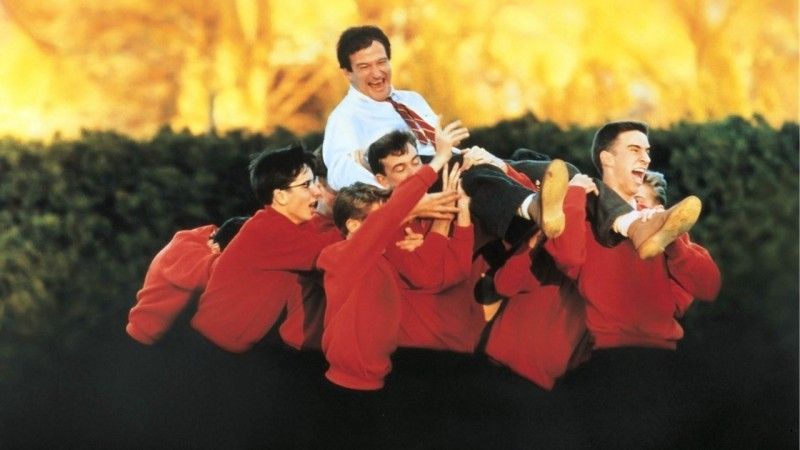
There was one thing that particularly stood out to me as an example of differing cultural outlooks, which I hadn't read about beforehand. To demonstrate, I think it might be good to first look at the movie Dead Poets Society. I'll assume my reader has seen it (because if he hasn't, he should), otherwise I'll include the standard warning of "spoilers ahead!"

Quick and dirty synopsis: The movie is about a group of boys attending a prestigious boarding school called Welton Academy, and how their lives are changed by an unconventional yet inspirational English teacher named John Keating. Several boys' stories are shown, but the one I want to focus on is Neil.

Neil, like the other boys in the group, is spurred to action by Keating's motto: Carpe diem! ("Seize the day"). When he hears about auditions for a stage production of A Midsummer Night's Dream, he decides to try out, as acting was something that had always interested him. There's only one problem: he has a strict father who doesn't approve of his son acting. He expects his son to become a doctor, and wants nothing distracting him from that goal. We learn that part of the reason for this is because Neil's father isn't a wealthy man, and he made a lot of sacrifices to send Neil to Welton. In that light, his father's actions are understandable, but we still feel bad for Neil.

Despite his father's disapproval, Neil continues ahead with the play, and when his father finds out, he's as furious as you would expect. He pulls Neil out of Welton in order to send him to military school, which leads a heartbroken Neil to commit suicide.

The message of this storyline (and really, the movie itself) is that people need to be able to follow the passions in their hearts, or they'll end up dead (either physically or internally). To a Western audience, such a message isn't terribly radical. After all, right or wrong, the values of individualism and personal happiness have become tenets of our cultural mentality. We understand why Neil's father was so tough on him, but when we see Neil's tragic fate, the message is clear: Neil should've been allowed to choose for himself what he wanted.

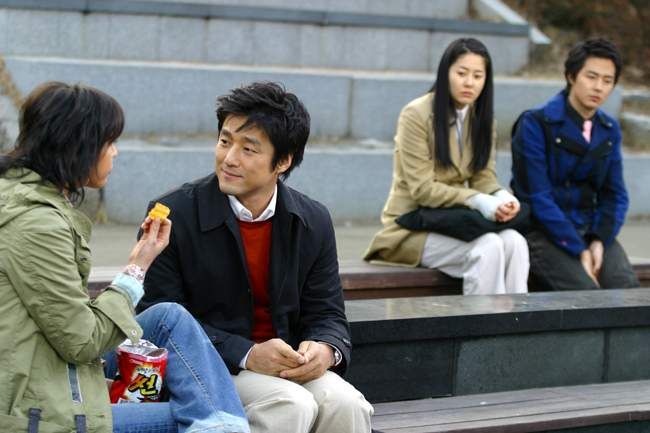
I'd like to contrast that with a work of fiction from Korea. Remember Spring Day? Yeah, I just reread my recap of it and I'd forgotten a lot of the things I mentioned in it. One of the plotlines in it is relevant to this discussion, so again, if you haven't seen it you're getting another spoiler warning (though truthfully, watching Spring Day shouldn't be high on anyone's priority list).

One of the characters in Spring Day is a young man named Eun-Seop. He's a doctor, but he hates his job. The only reason he became a doctor is because his father pushed him down that path. He has a passion though: jazz music. He would love to be a jazz musician, except he has that darn doctor job standing in his way.

Sounds similar to Neil's story, doesn't it? A father pushed his son to be a doctor, while his true passions were artistic in nature. When I first started watching the drama I just knew that he'd end up quitting his doctor job and finding true happiness with a syncopated rhythm. There was no doubt in my mind. After all, that was how it always went in America. If your current situation leaves you wanting, then you trade it for one that won't. It's either that or suicide ("it's such a strange strain on you..." Sorry, I had to throw in that Cheap Trick reference).

The only thing is...that wasn't how the story played out. Rather than ditching the stethoscope in favor of an upright bass, Eun-seop gradually applied himself more at his job and learned to make the best of his situation. In fact, his position as a doctor was what allowed him get the girl at the end (no, she wasn't a gold digger. Her small town needed a doctor, and he was able to fill the role).

To be fair, you can probably find Korean stories that follow the "American" pattern and vice versa, and it's possible that the writers of the drama originally intended for him to follow his jazz dreams (these dramas go through several rewrites over the course of their runs). It was surprising to me though, how the direction of the story belied my expectation.

Perhaps one factor is the high level of respect for the medical profession in Korea. Doctors are so revered here that it's possible they wouldn't want to portray the job as ultimately undesirable. It's commonly known that a high percentage of Korean-Americans become doctors or lawyers, and even in Korea many parents would love to see their kids go into those lines of work. Considering the country has only come out of poverty in the last 50 years or so, the older generations know how valuable financial security is, so they push their children into high-paying jobs like that.

Along those same lines though, I think, is perhaps a more important factor: Korea as a culture is less elevating of the individual's desires than the West. Let me illustrate.

At the kindergarten graduation ceremony last February, each kid gave an introduction saying "My name is __________ and I want to be a ___________." Three of the eight filled in the second blank with "doctor." Of course, it's more likely that their parents are the ones who want them to enter these careers, not they themselves. Two of my older students have talked about their futures as doctors as well. With one of them, he was talking about how good he was at soccer and I asked if he wanted to be a soccer player when he grew up. He said "No, my mother says I have to be a doctor."

Many Westerners might think that sounds cruel and spirit-crushing, but it almost seems as though these kids really feel like it's their destiny to follow the path their parents have set out for them. They seem resigned to it without any particular bitterness. If you're a Korean kid, your parents are going to force their will on you, and honoring it is just what you do.

This phenomenon has recently been dubbed "tiger parenting" thanks to a provocative excerpt published last year in the Wall Street Journal. The author, a Chinese-American woman named Amy Chua, discusses the parenting style she inherited from her own parents, which is common in Korea as well. It's a matter of pushing kids to be their best, and believing in them enough not to accept anything less. Some might criticize it, but it gets results, as Korea's rapid ascent can attest.

I see it myself with how my boss disciplines her two sons, and from hearing my students tell their stories. I read a journal entry from one girl where she talked about how her parents yelled at her for getting a bad score on a test. They claimed she didn't study hard enough, which made her want to cry. She also said in that entry that she hates studying with her father because he yells at her and she wants to hit him, but she can't because he's her father. I get the impression that her father is a tough man, because that girl's younger brother has suggested at various times that his father is scary.

While my native culture would side more with the Dead Poets Society view of personal autonomy, I don't think the Koreans' cultural outlook is wrong. After all, why do people have children? They want to contribute to the future. They want to know that after they're gone their genes will live on, and they hope that the great people of tomorrow will be connected to them in some way. A culture that understands that and honors it is a wise one.

In Confucian principles the concept of loyalty to family is called filial piety. That idea really resonated with me when I first read about it, because it seems to be in line with how I live my life. While perhaps I haven't always acted like it, I've always wanted to honor my parents and not be a failure in their eyes, because I can only imagine how heartbreaking it is to be the parent of a child who strays from the values he was raised with and disrespects the sacrifices that were made for him. The last thing I want to do is break my parents' hearts, and I'm always happy to know when they're proud of me. I don't know if I'll ever have children, but if I do, I hope they respect me in the same way.

Since I'm not Korean, I don't know what tiger parenting is like from an insider's perspective, and I can't really tell you what happens when the child fails to live up to expectations. I can only imagine that it's difficult for both parents and children (and most of us know about South Korea's high suicide rate, though I don't know that the rate among teens is significantly different than the U.S.'s). I am a bit concerned about one of the kindergarteners I mentioned above who expressed his desire to be a doctor. He's a really sweet kid, and really funny too, but if I'm being completely honest, I don't know if he has what it takes to be a doctor. He's always been one of the slower kids in class, though he does seem to try very hard. I think he'd make a great actor or comedian (shades of Neil again), but given the instability of show business, it's unlikely that many parents would choose that route for their child. I can only hope that if it becomes clear that he's not destined for a career as a doctor, this boy's parents will be understanding and help him find a more realistic path.

I guess a lot of what I've written here isn't about how the last year has impacted me, and more an opportunity to muse about culture. Perhaps I should wrap it up with some final thoughts.

I've spent most of my life wandering, too afraid to take any bold steps or go after opportunities. I don't know what life has in store for me, but whatever happens, I know that I can be proud of myself, because I've spent this last year doing something worthwhile that makes me feel like my existence is justified. Some people are cynical about what I do for a living, including many people who do it themselves. They think it's just an easy money job that most any minimally-qualified native English speaker could do. I don't look at it that way. I see it as an opportunity to help children have a better future, and I view that as a big responsibility.

Am I a good teacher? It depends on what you mean by "good." I think that as far as form and whatnot goes, I still need a lot of work. I'm not the best at controlling classrooms or communicating things clearly. I'll be the first to admit that my teaching is still a work in progress. If by "good" you mean dedicated and honest, then I believe I am. Even my coworkers have told me they think I have a good heart, which is certainly meaningful to me. I value my character, and while I can never be perfect, I want to strive to live the best I can. I hope that when my students sit in my class they can see that I really do care about them.

I've now spent one year doing a job that's given me tons of stress and frequent frustration. I put my heart and soul into it, and the decision was still made not to renew my contract once it expired. I've spent many moments lonely and isolated by both the country I'm a foreigner in and the differing attitudes of my fellow foreigners. On the surface it sounds like my year was ultimately a failure, but I can't see it as anything but a success. Here's to continued success in my next year.

Wednesday, May 16, 2012

Changes

It's been a while since I've updated this blog, so I guess I'm about due to throw something up here.

For starters, some of you may not have heard, but my current school decided not to renew my contract. Fortunately, I won't be unemployed for long, as I've lined up my next job. I won't be in Gwangju anymore, but a little bit south in a smaller town called Naju. There'll be more kindergarten teaching, which seems to be a strong point for me, and hopefully a better fit for my abilities. I'm starting as soon as I finish here in a month, so it looks like I won't be able to make a trip home this year. For all the family members missing me, believe me, I miss you too.

Second, my crappy old laptop finally gave out on me at the beginning of this month (seriously, it was on May 1), and I finally got around to buying a new one. I decided to get a brand new one here in Korea, as I'd be able to get service for it if I needed to, and it would be built for this country's specifications. So far I'm not regretting the choice, as this thing runs like a champ (it did act weird on me one time, but I'm hoping that was either a fluke or something that can be easily fixed). I was a little frustrated to find that I apparently hadn't backed up certain files from my old laptop, ones I could've sworn I had. Perhaps it's still possible to retrieve them from the old hard drive, but I don't need to worry myself with that right now.

Some of you may know that karaoke was something that always looked fun to me, but I never had the occasion to participate in it. In Korea their version of karaoke is called noraebang (노래방), which means "song room." It's literally a room where a group can hang out and sing karaoke songs, and I've been wanting to try it ever since I got here.

I still haven't been to one of those, but a friend of mine showed me an arcade where they have a long row of booths along the wall. It turns out that these are just small boxes that are big enough for only a few people. However, there's a karaoke machine in each one, and you can stay as long as you want. I've made it my weekend ritual to visit this arcade and sing some songs. It's quite addictive. Some people might be surprised that I manage to have so much fun by myself, but when you're a social misfit you learn how, and it's not really a big deal. I made my first song "Daydream Believer" in honor of Davy Jones, and I've performed it every time I've been there. The only other song I've done each time is "이젠 그랬으면 좋겠네." Jo Yong Pil (조용필) is such a great artist.

Work is stressful as always, but it's still something I love and take pride in. I was disappointed at first when I learned that my school didn't want to keep me, but now I'm looking forward to the new town and new teaching experience that awaits me. If this new job is better for me than my current one is, I have nothing to be sad about, except the fact that it'll be hard for me to say goodbye to the kids and co-workers I love so much.

Saturday, April 21, 2012

Ballgame #2

Several years back I read a thread on a baseball message board where the members were talking about going to baseball games alone. Ever since then, I wondered what it would be like. Since I didn't have to go to work yesterday, I decided that the time was right for me to try it.

If you recall, last time I went I took three of my students with me. This time I didn't have to keep an eye on any kids, so I was able to do whatever I wanted. Quite frankly, it was freeing. I was able to take in the entire experience and pay close attention to the game. I also got a good seat because I arrived at the ballpark an hour before game time. I was in the seats above the home dugout, which is where all the cheers are led from. It was fun being part of a big, mad mass of KIA Tiger rooters.

I think the baseball experience in Korea is reminiscent of the early days of MLB. The fans are really into the game, and they even sing songs and do special cheers for every starter (though they do seem to have some generic cheers that can be appropriated for more obscure players). Many of the cheer songs use the melodies to other songs, such as "Smoke on the Water," "Mamma Mia," "Pretty Woman," "Saturday Night" (at least I think that's what it was. The Bay City Rollers classic has a very popular melody) and "La Bamba." Their second baseman's cheer is even done over the main synth riff to Jang Yoon-Jeong's "사랑아," which I recognized instantly.

Here's a video so you can get a feel for it yourself:


If you have a sharp ear you might catch my comments, including an imitation of the umpire from Ken Griffey Junior Presents Major League Baseball: "Foul!" The Tigers' first baseman was actually a former Cub, Choe Hui-Seop (as I prefer to romanize it), better known as Hee Seop Choi to America. You can see him get an RBI groundout in the above video (he's #23).

Both starting pitchers were actually American. The Tigers' starter was Anthony Lerew, formerly of the Braves and Royals, while the Lotte Giants' starter was a former San Francisco Giant, Ryan Sadowski. Neither one was particularly good, though the same could be said for pretty much any pitcher in yesterday's game.

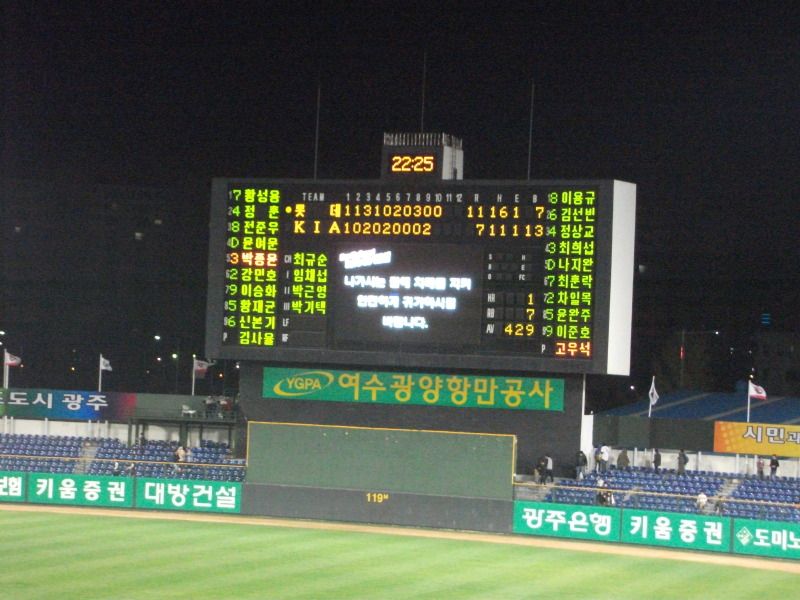
Check out the final scoreboard:


Perhaps it's difficult to read, but the Giants scored 11 runs on 16 hits, one error and 7 walks. The Tigers scored 7 runs on 11 hits, one error and 16 walks. Besides poor run prevention, the thing that killed the Tigers was stranded baserunners. How do you get on base 25 times and only score 7 runs?

Some memorable moments? There were several in this slugfest:

Tigers' starting right fielder Shin Jong-Gil misplaying the first batter of the game's drive into a leadoff triple. He would be removed after striking out in his first at-bat.

Choe Hui-Seop getting casually tagged out by the catcher when trying to score from second on a bases-loaded single.

Back-to-back homers from Giants Bak Jong-Yoon and Gang Min-Ho.

Two middle-aged men sitting near me starting chants when a certain Giant player came up to bat (I'm not sure if I was hearing them correctly, as my understanding and comprehension of Korean is obviously limited, but I believe these chants were insulting in nature), eventually stopping when another man came over and hit them with one of his Thunderstix. It was all in good fun, but it seemed like things were getting nasty when the Giant player got hit with a pitch during their chant.

A Tiger batter coming up with the bases loaded and hitting a long drive to the right field corner that just barely landed foul. Everyone around me was cheering as if it had been fair, but I was confused, because it looked foul to me the second it hit the ground. I was wondering if my eyes had deceived me until everyone settled down and realized it had been called foul.

Every time it seemed like the Tigers were getting close, the Giants would open up the gap again. During the seventh and eight innings, a lot of people left. Being a true baseball fan though, I stuck it out to the end, along with many other diehards, and we were nearly rewarded.

As you can see by the line score above, the Tigers lost by four, but they scored two runs in the bottom of the ninth. With two outs they actually had the bases loaded, meaning a home run would tie it. The Tigers sent up pinch-hitter Jeong Sang-Gyo, who hit a deep warning-track drive that looked like it was going to go for a few seconds before landing in the left-fielder's glove. Ah well. It was fun while it lasted.

Earlier today I watched highlights of the game on TV. I kept going "yeah, I remember that," except I was seeing it from a different angle. I have to say that watching baseball on TV is much different than watching it live. On TV everything seems to happen so quickly, but at the ballpark every time the bat makes contact with the ball is a moment of tension. Will it fall for a hit? Will it get through the infield? You just don't know. It's more exciting that way.

Even though my team lost, it was one of the best days at the ballpark I've ever had. It was fun to have a baseball outing all to myself. Maybe if I get the chance I'll do it again sometime.